How to pay self assessment tax
- Total due on 31 January
- £10,698
- Computed on this page from the inputs below
- Balancing payment due 31 January (negative is a repayment)
- £7,132
- Computed on this page from the inputs below
- Each payment on account for next year
- £3,566
- Computed on this page from the inputs below
- Due on 31 July
- £3,566
- Computed on this page from the inputs below
The rates, thresholds and deadlines these sheets apply are HMRC's published figures for the tax year you select; everything else is arithmetic on the numbers you typed.
Email me this result
We will send you these figures and a link back to them. One email, nothing else unless you tick the box.
The figures shown are a worked example (£10,698); yours replace them as you type.
Download the How to pay self assessment tax worked example (CSV)
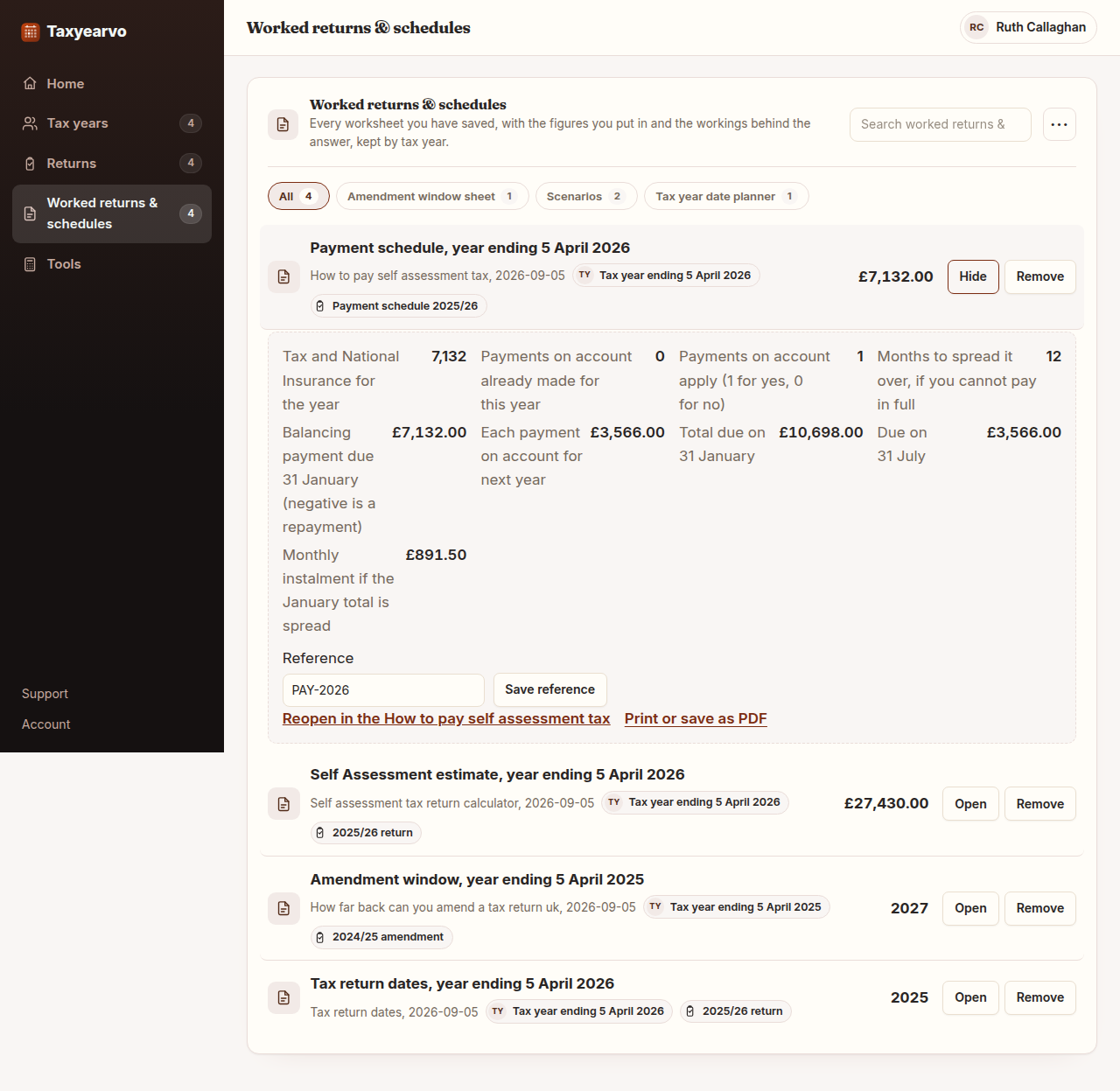
Knowing the bill is half of it; the other half is when each part of it is due and what to do when the money is not there. This sheet takes the figure the estimator produced and lays out the payment dates for that tax year: the balancing payment on 31 January, the first payment on account with it, the second on 31 July. It also works out what a monthly instalment would look like if you spread the bill, and what interest a late payment attracts.
What somebody filing their own return asks about the How to pay self assessment tax
Can I pay a Self Assessment bill in instalments?
Often yes. HMRC offers a Time to Pay arrangement for people who cannot pay in full, usually as monthly instalments with interest running. The sheet shows what a monthly figure would be so you can propose one you can actually keep.
What happens if I pay late?
Interest runs from the due date, and there are separate late payment penalties once a balance has been outstanding for long enough. Those are on top of any late filing penalty, which is charged even when no tax is owed.
Does paying early help?
It stops interest and it removes the risk of forgetting, but it earns you nothing else. What it does not do is change the payments on account, which are set from the previous year's bill rather than from what you have already paid.