Tax return dates
- Register by 5 October (0 if not owed)
- 2,026
- Computed on this page from the inputs below
- Tax year begins 6 April
- 2,025
- Computed on this page from the inputs below
- Paper return by 31 October
- 2,026
- Computed on this page from the inputs below
- Online return and balancing payment by 31 January
- 2,027
- Computed on this page from the inputs below
The rates, thresholds and deadlines these sheets apply are HMRC's published figures for the tax year you select; everything else is arithmetic on the numbers you typed.
Email me this result
We will send you these figures and a link back to them. One email, nothing else unless you tick the box.
The figures shown are a worked example (2,026); yours replace them as you type.
Download the Tax return dates worked example (CSV)
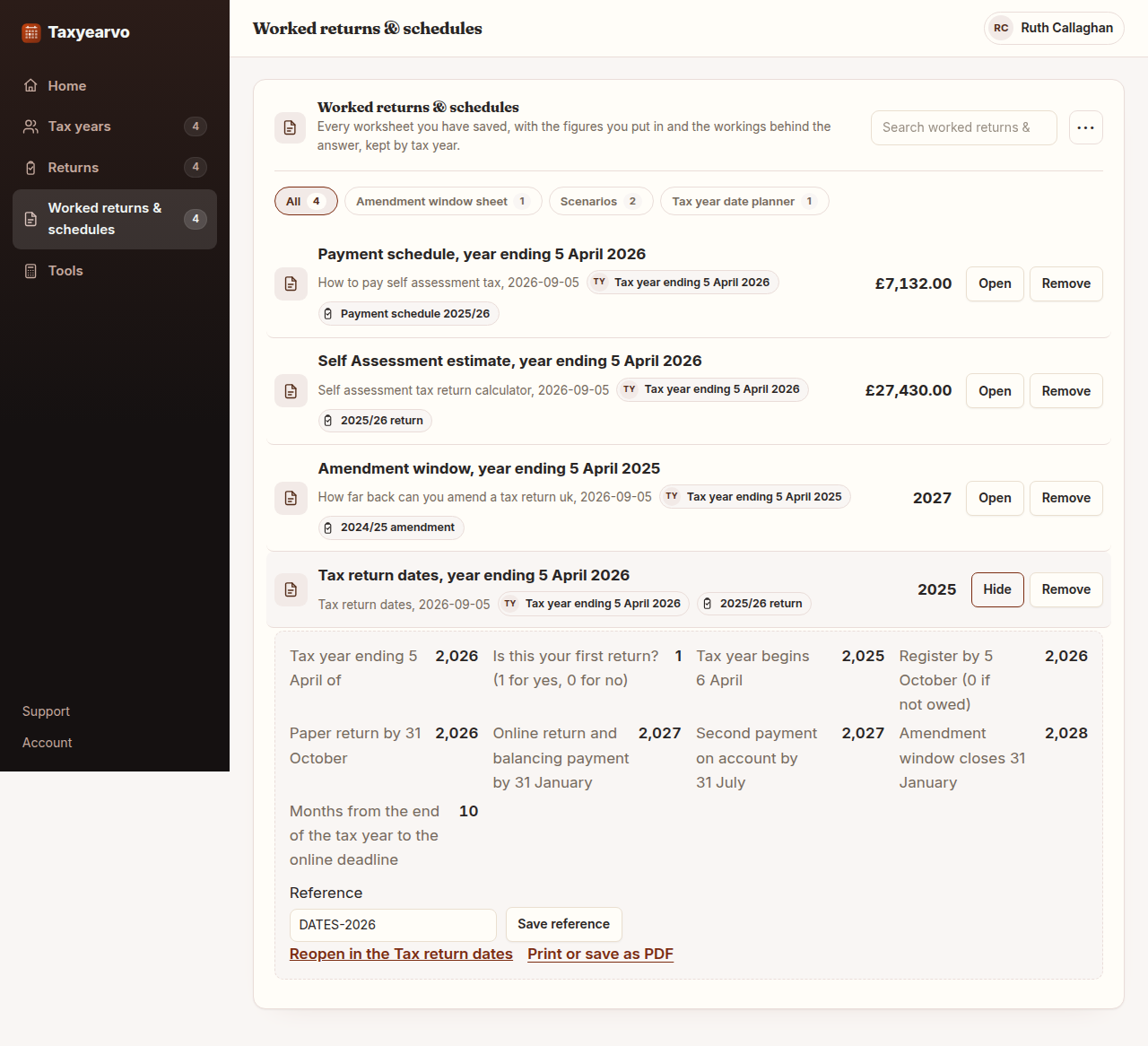
The UK tax year runs from 6 April to 5 April, which is why nothing about a Self Assessment return lines up with a calendar year. This sheet takes the year you are filing for and puts every date that matters against it: the 5 October registration deadline if this is your first return, the 31 October paper deadline, the 31 January online deadline and balancing payment, and the two payments on account on 31 January and 31 July. Put a date in and it tells you which tax year that receipt or expense belongs to.
What somebody filing their own return asks about the Tax return dates
Why does the tax year start on 6 April?
It is a historical artefact of the old quarter days and the calendar change of 1752, and it has never been moved. The practical consequence is the only one that matters here: income and expenses are allocated to the year that ends on 5 April, not to a calendar year.
Which tax year does a payment in early April belong to?
The one that includes the date the income arose. A payment for work done on 2 April falls in the year ending 5 April; the same work done on 8 April falls in the next year. The sheet answers this for any date you enter.
What if I registered late?
Registration is due by 5 October after the end of the tax year the income arose in. Registering later does not remove the obligation to file, and the filing and payment deadlines do not move, so the sheet still shows the same dates.